
Metal Roofing in Colorado
Metal roofing across Colorado.
- Free storm damage inspections
- Independent local contractors
- Written scope and documentation
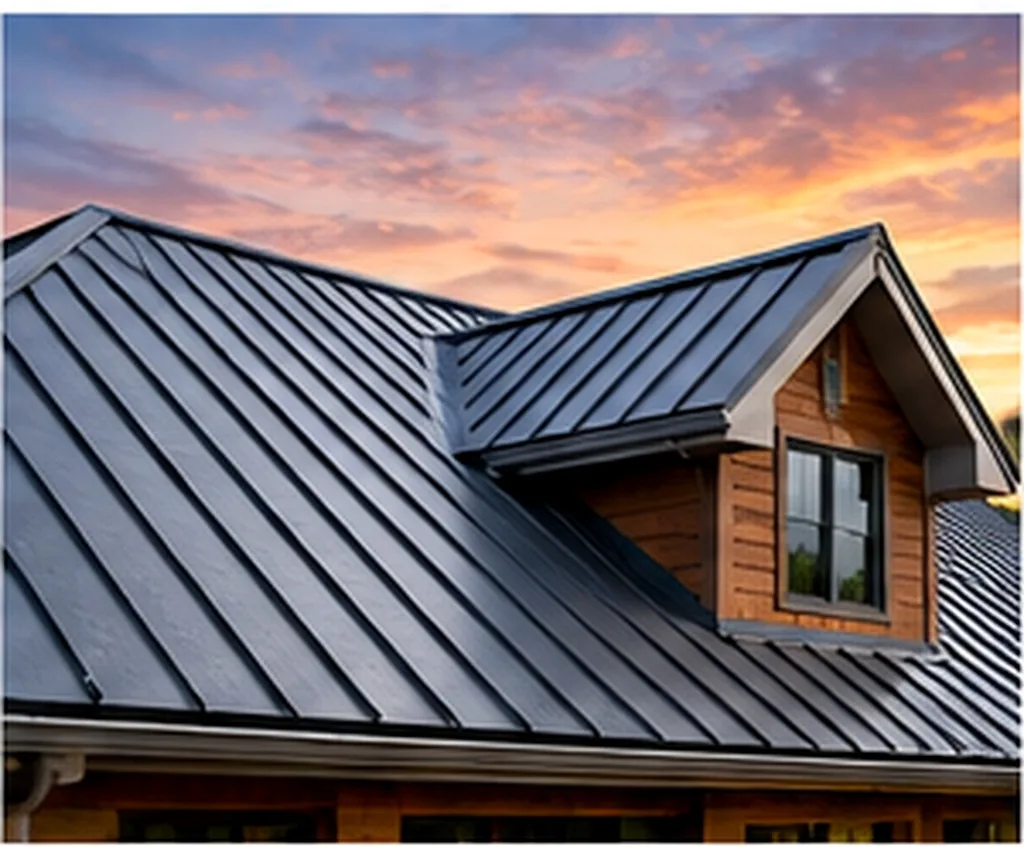
Metal roofing uses interlocking panels or shingles — most commonly standing seam — instead of asphalt. In Colorado it is chosen for snow shedding in the mountains, fire resistance in wildland-urban interface areas, and a service life that typically runs decades longer than asphalt. The trade-off is higher upfront cost and fewer qualified installers.
Why metal roofs suit Colorado conditions
Colorado asks a lot of a roof: intense high-altitude UV, hail, wide daily temperature swings, heavy snow loads at elevation, and in many areas genuine wildfire exposure. Metal handles most of that unusually well.
Snow is the clearest case. A smooth metal surface sheds snow rather than accumulating it, which reduces structural loading and largely eliminates the ice damming that plagues asphalt roofs in mountain communities. That is why metal is so common in places like Steamboat Springs, Durango and Glenwood Springs.
Fire resistance is the other major driver. Metal roofing is non-combustible and achieves the highest fire ratings, which matters materially for homes in the wildland-urban interface — and increasingly for insurability in those areas. UV durability is a third advantage: modern coated metal holds its finish under high-altitude sun far longer than asphalt holds its granules.
Metal roofing systems available
Not all metal roofing is standing seam, and the differences affect both appearance and performance.
| System | Description | Best suited to |
|---|---|---|
| Standing seam | Vertical panels joined by raised seams with concealed fasteners. No exposed penetrations through the panel face. | Snow-shedding mountain roofs and anywhere long-term weather tightness is the priority. The premium residential option. |
| Exposed fastener panel | Corrugated or ribbed panels screwed through the face. Lower cost and faster to install. | Outbuildings, agricultural structures and budget-sensitive projects. Gasketed fasteners need periodic attention. |
| Metal shingles and tiles | Pressed panels that mimic slate, shake or tile while keeping metal's weight and durability advantages. | Neighbourhoods and HOAs where a conventional roof appearance is required or expected. |
| Stone-coated steel | Steel panels with a bonded stone granule surface, combining metal strength with a textured look. | Owners wanting metal performance without the distinctly modern standing seam appearance. |
Material choice within those systems matters too. Steel is the most common and cost-effective; aluminium resists corrosion better and weighs less, which suits coastal-style exposure and lighter structures; copper and zinc are architectural choices with very long lifespans and prices to match.
Metal roofing and hail: the honest answer
This deserves a straight answer rather than a sales pitch, because the marketing around it is frequently misleading.
Metal roofing does not make your roof hail-proof. Large hail can and does dent metal panels, particularly thinner-gauge aluminium and standing seam with wide flat pans. What metal does is fail differently: a dented metal panel is usually still fully watertight and functional, whereas a hail-bruised asphalt shingle has lost the granule layer protecting it and begins degrading immediately.
So the practical distinction is cosmetic damage versus functional damage. For a homeowner that is a meaningful advantage — you are far less likely to need a full replacement after a storm — but anyone telling you hail will not mark a metal roof is overselling. Profiles with striations or ribs hide denting better than flat pans, and heavier gauge resists it better.
Many metal products carry Class 4 ratings under the UL 2218 impact standard, which a number of Colorado insurers recognise with a premium discount. If reducing hail exposure is your main goal, compare metal against Class 4 impact-rated asphalt during your roof replacement planning — the impact-rated asphalt route often costs considerably less while still earning the discount.
What metal roofing costs, and when it pays back
Metal costs more upfront than asphalt — that part is not in dispute. Whether it is the better financial decision depends on factors specific to you.
The cost drivers are the system and material selected, panel gauge, roof complexity (every valley, dormer, hip and penetration requires custom flashing and fabrication, so complex roofs cost disproportionately more in metal), installer availability in your area, and whether the deck needs work or a substrate layer added.
Payback depends mainly on how long you will own the property. A metal roof that outlasts two or three asphalt roofs is good value for someone staying put for decades, and poor value for someone selling in five years. Factor in the possible insurance discount, the reduced likelihood of storm-driven replacement, and — in wildfire-exposed areas — the fact that insurability itself may be affected by roof material. Our Colorado roofing cost factors guide goes through the variables in more detail.
Choosing a metal roofing installer
This matters more with metal than with asphalt. Metal roofing is a fabrication trade as much as an installation trade, and the failure modes of a badly installed metal roof are expensive to correct.
The critical detail is thermal movement. Metal panels expand and contract significantly with temperature, and Colorado's daily swings are large. Panels must be fastened in a way that allows that movement — clip systems on standing seam exist precisely for this. An installer who fastens panels rigidly will produce oil-canning, seam stress and eventually failures at the fastener points.
Ask specifically how long they have been installing metal, whether they fabricate panels on site, which manufacturer systems they are certified for, and to see completed local work that has been through a few Colorado winters. Not every roofer who installs asphalt well installs metal well — the skill sets genuinely differ. When you call our Colorado roofing network, tell us you are considering metal and we will route you to contractors who do this work regularly rather than occasionally.
Whichever situation applies to you, the starting point is the same: an inspection from a contractor who can legally work at your address. We connect property owners with our Colorado roofing network across all fifty cities we cover, matched by jurisdiction rather than by whoever happens to be nearest. If you are weighing this service against another option, our overview of roofing contractors throughout Colorado sets out everything we help with.
Metal Roofing — common questions
How long does a metal roof last in Colorado?
Considerably longer than asphalt. Manufacturer warranties on quality standing seam systems commonly run several decades, and the finish warranty is often the limiting factor rather than the metal itself. High-altitude UV is the main ageing factor for the coating, so finish quality matters here more than in milder climates.
Are metal roofs noisy in rain or hail?
Much less than people expect. A metal roof installed over solid decking with underlayment, beneath an insulated attic, is not noticeably louder than asphalt. The noise reputation comes from metal over open purlins on barns and sheds, which is a completely different assembly.
Will a metal roof make my house hotter in summer?
No — generally the opposite. Metal reflects a significant portion of solar radiation rather than absorbing it the way dark asphalt does, and many coatings are specifically engineered for solar reflectance. In Colorado's high-altitude sun that can reduce attic temperatures meaningfully.
Can metal roofing be installed over existing shingles?
Some systems permit it and some jurisdictions allow it, but it is usually not advisable. An overlay hides deck condition, can create an uneven substrate that shows through the panels, and complicates ventilation. Most quality installers recommend a full tear-off so the deck can be inspected and the system installed properly.
Does a metal roof need snow guards?
Often yes, and this is important. Metal sheds snow efficiently — which means snow can release suddenly in large volumes. Above entries, walkways, driveways and decks that is a genuine safety hazard. Snow guards or retention systems control the release, and any competent mountain installer will raise this before you have to ask.
Metal Roofing across Colorado
We connect property owners with contractors offering metal roofing in every city we cover. These are our busiest areas for this service:
See all 50 Colorado cities we cover →
Related roofing services
Get a free metal roofing quote
Call and we will connect you with an independent local roofing contractor covering your area.
(720) 791-0495Mon–Fri 7am–7pm · Sat 8am–5pm · Sun 9am–4pm (MT)